

AI application development is changing what we expect from software. Rigid, static dashboards are out; dynamic, conversational experiences are in. The modern AI assistant is not just a standalone chatbot capable of regurgitating answers from a script.
Instead, a properly engineered AI assistant is an integrated system that can understand human intent while simultaneously accessing real-time data and executing complex workflows.
Building the underlying technology is only half the equation in AI application development. The other half is building an assistant that is pleasing to users rather than one that frustrates them. Success lies entirely in how the interaction model is designed and how well it performs.
Moving Beyond the Prompt Box

Traditional software development has long relied on predictable visual cues like buttons, drop-down menus, and forms. All user input results in a software response. For example, if a user clicks on a button, the software determines what he is able to do from there.
Although the model has worked well from the start, it introduces limitations. Conversational interfaces remove the limits by getting rid of visual guardrails.
Take a blank chat prompt, for instance. It offers infinite freedom. Unfortunately, it can also introduce cognitive friction. A user who doesn’t know what to say or does not understand how to phrase a command will quickly discover that the software stalls.
According to GojiLabs, this is where specialized AI UX design services become critical. Designing a conversational interface requires creating an intuitive natural workflow out of basically nothing.
To do so, developers cannot rely on legacy systems like wire-framed buttons and map layouts. Instead, they must map out conversational structures.
They must dig into turn-taking dynamics and error recovery flows. Success is determined by developing transparent system capabilities without overwhelming users.
3 Pillars of Conversational UI Design
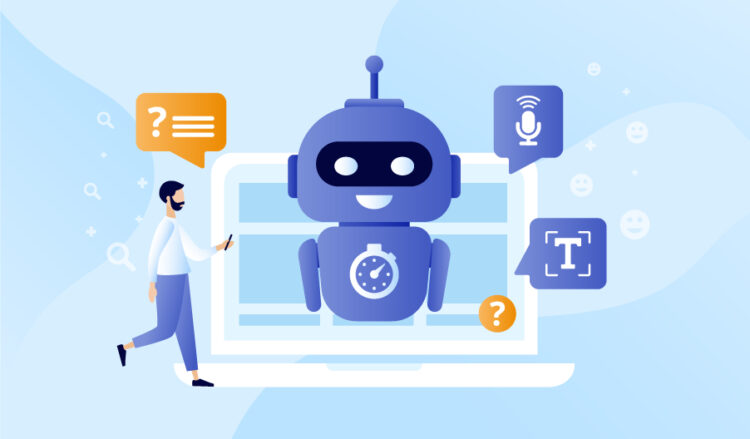
Designing conversational interfaces that drive meaningful engagement is not for the faint of heart. Software developers focus on three primary principles:
1. Context and Flow Mapping
The human brain plays a huge role in conversational understanding. Put another way, conversation requires a combination of memory and context. For example, if a user tells his AI assistant to find flights to Los Angeles and then follows up with a command to book the first option, the interface must maintain context from the previous turn.
AI software developers must build in the ability to handle multi-step workflows that can retain memory across a session.
2. Error and Edge Case Handling
AI is always subject to going off script, whether a user is inputting text or speaking commands. So a user might input an ambiguous request or drop an unsupported file type in the chat.
A user might even ask a bot to do something outside of its scope. Rather than responding with a simple “I didn’t understand that”, a well-designed interface offers dynamic suggestions to get the conversation back on track.
3. System Personality and Guardrails

To make the interface truly conversational, it must have its own personality built in. But personality leaves room for problems. So guardrails need to be built in as well. For example, one app might need to be strictly professional while another is more casual.
Both apps must have defined language structures. Both must also have guardrails that make them feel reliable. Both must provide proper feedback when tasks have successfully been completed.
At the end of the day, successful AI implementation requires two things: back-end capability and front-end clarity. The team that can master the perfect combination is capable of developing AI software customers will come back for time and again.