

Corporate leaders are prone to a curious myth: that corporate threat intelligence exists solely to protect high-profile individuals and executive leadership from physical harm and targeted harassment. Corporate threat intelligence does achieve that goal. But limiting it to that one task is to underutilize its vast capabilities.
Thanks to the digitally interconnected world we now live in, corporate threat intelligence is forced to operate across a much broader spectrum. Logic would dictate that security teams maximize their reach to its full potential. But how do they manage it? By turning it into an enterprise-wide asset capable of not only protecting executives but also:
- Safeguarding intellectual property
- Defending critical technology infrastructure
- Preemptively stopping even the most sophisticated cyberattacks
Corporate threat intelligence is uniquely suited to be a proactive security tool applicable across many fronts, according to Red5 Security. As an protective intelligence service provider, the company leverages corporate threat intelligence on behalf of its clients. They use it to do far more than just protect executives.
Intellectual Property and Trade Secrets

For so many modern enterprises, institutional value resides in intellectual property and assets. We are talking about things like proprietary software, strategic marketing initiatives, manufacturing blueprints, and even pharmaceutical formulas. These are all assets subject to a variety of threats.
Insiders might want to get revenge or sell company secrets. Competitors are always looking for a way to get an edge. Even state-sponsored individuals or groups may target a corporation to better understand how they can launch attacks against other adversaries.
The challenge is stopping such threats using traditional security alone. Traditional security doesn’t give much weight to intelligence. Rather, it focuses on hardening networks and databases. It is reactionary in nature. Threat intelligence is just the opposite. It looks outward in an attempt to understand who wants data and what they intend to do with it.
Identifying Technical Exploits
Beyond protecting intellectual property and trade secrets, corporate threat intelligence can be utilized to identify and stop technical exploits. Analysts searching the dark web and other open-source intelligence (OSINT) channels might uncover a pending phishing attempt. They might learn of a new piece of malware a known hacking group is preparing to launch.
The gathered intelligence data can be contextualized and turned into actionable advice. In its advisory role, a company like Red5 would present intelligence data along with potential solutions for thwarting pending attacks.
Stopping a Phishing Attack
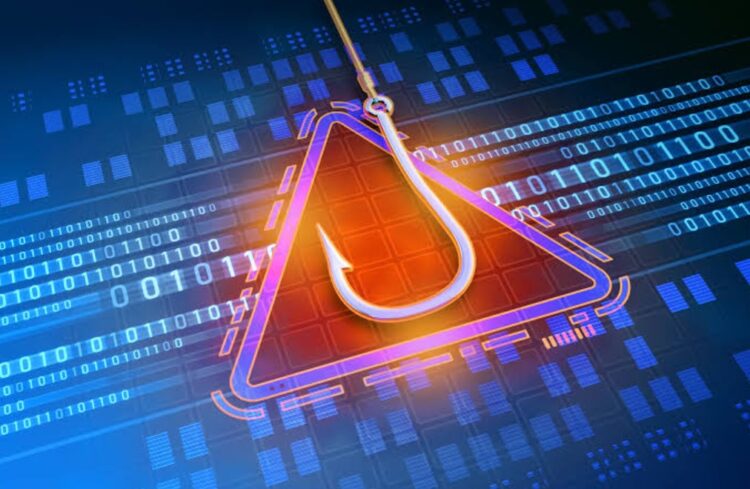
Phishing campaigns are high priority because they are one of the most fundamental and utilized means of gaining unauthorized access to corporate networks. To stop them before they even get started, analysts monitor their intelligence channels in search of external infrastructure being built by adversaries.
For example, analysts look for look-alike or typo-squatted domains. If they find any, they proactively block the domains at the firewall level. Meanwhile, they will also scour their sources looking for any mentions of the organization or its executives, employees, or intellectual property.
Neutralizing Malware and Ransomware
Corporate threat intelligence can also be used to neutralize malware and ransomware attacks in the early stages. Doing so is a bit more complicated given that modern malware is increasingly polymorphic. But by studying adversary Tactics, Techniques, and Procedures (TTPs), analysts can spot a pending attack before it’s launched. They can inform the IT team so that proper defensive action can be taken.
There is more to say on this subject than can be contained in a single post. Here is the point: corporate threat intelligence is no longer reserved exclusively to protect executives and HNWIs. It’s a tool that can be leveraged to protect an organization on multiple levels.